Tenex is a revolutionary option for patients who have exhausted other non-surgical therapies. Unlike traditional surgery, it provides a targeted, tissue-sparing approach that combines the precision of ultrasound with the power of ultrasonic energy to treat tendinosis effectively. Dr. Badia emphasizes that many patients with lateral or medial epicondylitis cannot afford to wait 12–18 months… [Read More]
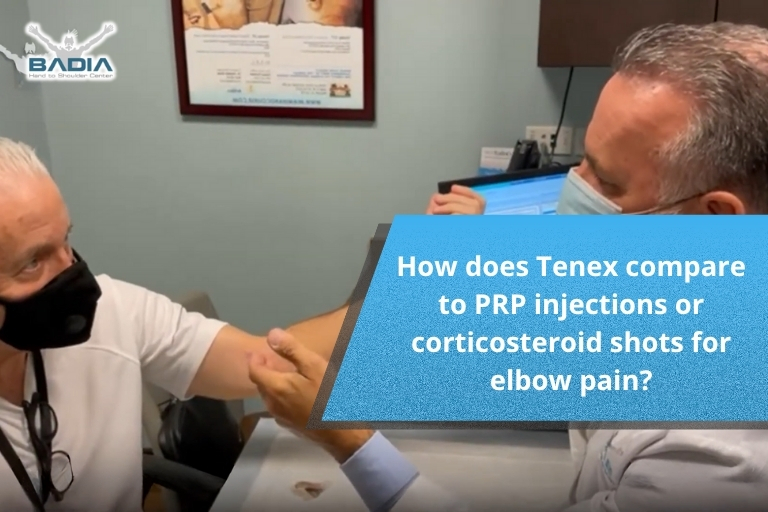
How does Tenex compare to PRP injections or corticosteroid shots for elbow pain?
PRP (Platelet-Rich Plasma) injections and corticosteroid shots are commonly used to manage pain and inflammation in tennis or golfer’s elbow. While these treatments may offer temporary relief, they do not physically remove the diseased tissue that causes chronic pain. Tenex, on the other hand, removes the damaged tendon tissue entirely. This addresses the root cause… [Read More]
How soon can I return to work or sports after Tenex?
One of the key benefits of the Tenex procedure is its quick recovery time. Most patients return to light activities within a few days. Dr. Badia generally advises avoiding strenuous exercise or repetitive movements involving the treated tendon for about 1 to 2 weeks. For athletes or individuals in physically demanding jobs, full return to… [Read More]
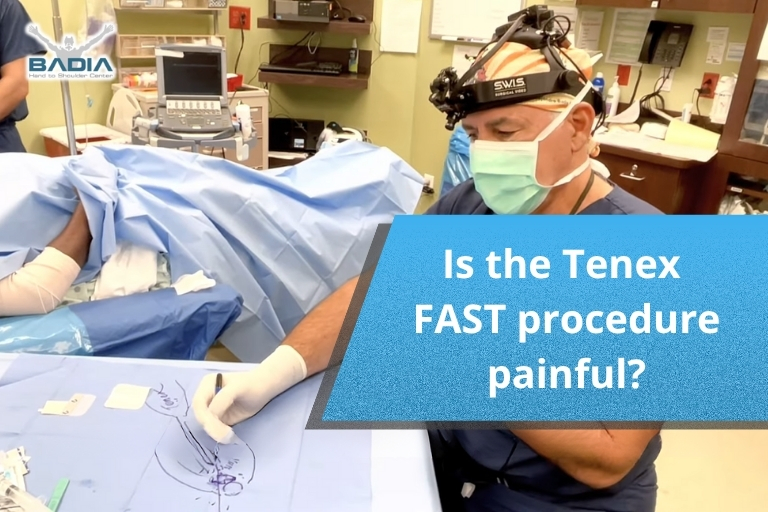
Is the Tenex FAST procedure painful?
The Tenex FAST procedure is designed to be comfortable and minimally painful. Since it’s done under local anesthesia, you won’t feel pain during the procedure itself. The insertion of the microtip and the removal of diseased tissue are performed with precise control and real-time ultrasound imaging. After the procedure, some patients may experience mild soreness… [Read More]
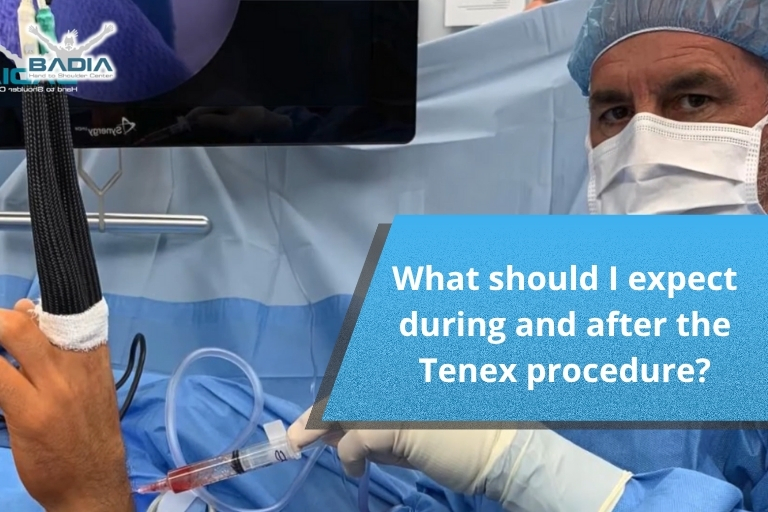
What should I expect during and after the Tenex procedure?
During the Tenex procedure, you’ll be awake but comfortable. Dr. Badia administers local anesthesia to numb the treatment area, and a tiny incision (about 3 mm) is made to allow the Tenex microtip to access the affected tissue. Using ultrasound for precision, the ultrasonic energy removes the damaged tendon tissue while preserving healthy structures. After… [Read More]
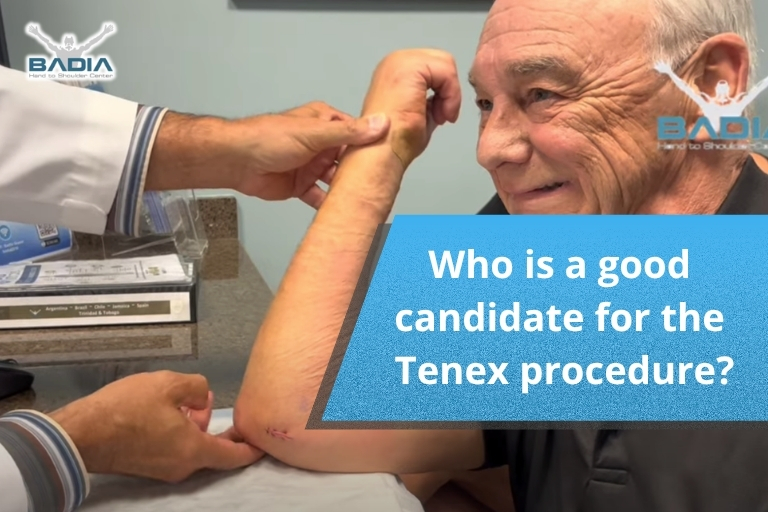
Who is a good candidate for the Tenex procedure?
The ideal candidate for Tenex is someone suffering from chronic tendinosis that has not improved with conservative treatments. This includes individuals with: Patients often report symptoms lasting more than 3 to 6 months, with localized pain and limited mobility. Tenex is especially well-suited for athletes, tradespeople, and active individuals who need a reliable and fast-acting… [Read More]
Can Tenex help with golfer’s elbow (medial epicondylitis)?
Absolutely. Golfer’s elbow, or medial epicondylitis, affects the tendons on the inner side of the elbow and is often caused by repetitive wrist flexion or gripping. Like tennis elbow, it involves tendinosis—or degeneration—rather than inflammation. Traditional treatments like rest, physical therapy, or corticosteroid injections often fall short in providing lasting relief. Tenex addresses the root… [Read More]
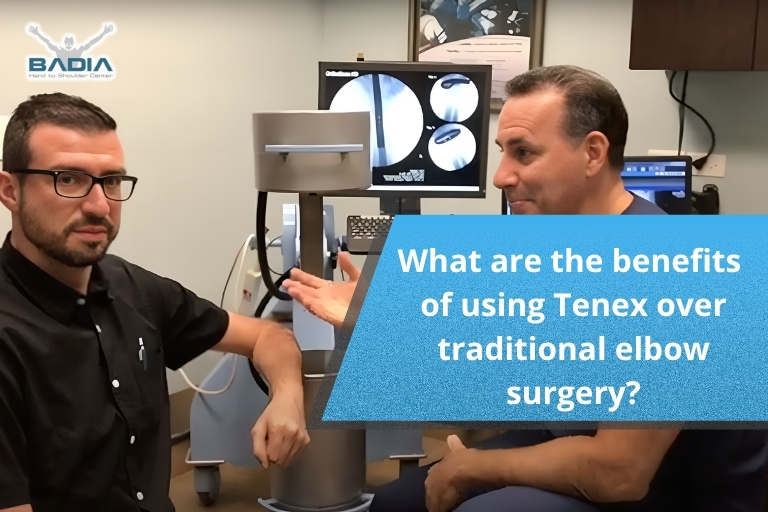
What are the benefits of using Tenex over traditional elbow surgery?
One of the main advantages of Tenex over traditional open surgery is that it is far less invasive. With Tenex, there is no need for general anesthesia, large incisions, or stitches. The microtip used during the procedure is approximately the size of a syringe, and the entire process is guided by real-time ultrasound imaging. Other… [Read More]
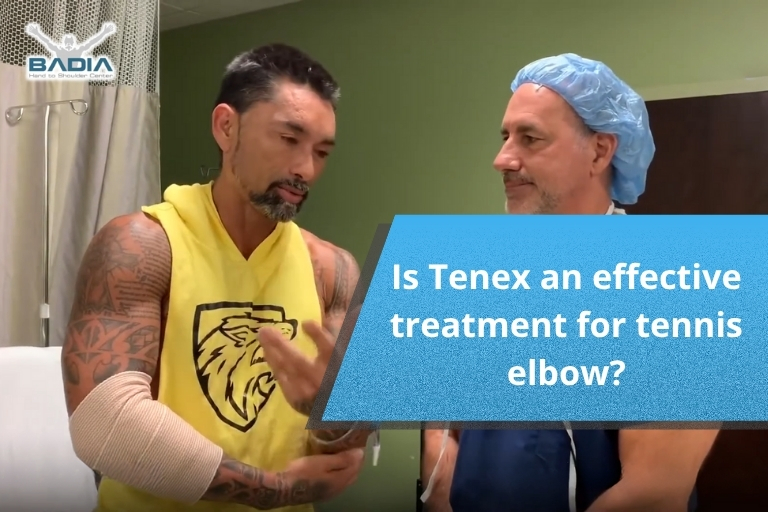
Is Tenex an effective treatment for tennis elbow (lateral epicondylitis)?
Yes, Tenex has proven to be highly effective for treating tennis elbow, also known as lateral epicondylitis. This condition involves microscopic tears in the extensor carpi radialis brevis (ECRB) tendon, which leads to pain on the outside of the elbow. For individuals whose symptoms persist despite rest, physical therapy, injections, or bracing, Tenex provides a… [Read More]
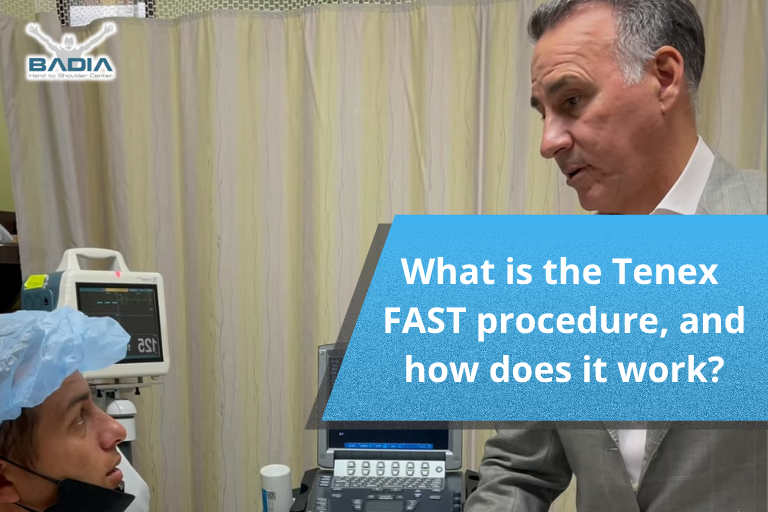
What is the Tenex FAST procedure, and how does it work?
The Tenex FAST (Focused Aspiration of Soft Tissue) procedure is a minimally invasive technique designed to treat chronic tendinosis and fasciosis. It uses high-frequency ultrasonic energy to remove damaged tissue from tendons without harming the surrounding healthy structures. Under ultrasound guidance, a small incision is made to insert a specialized microtip handpiece that delivers targeted… [Read More]
Can I Get a Virtual Consultation for Thumb Pain or Thumb Arthritis?
Yes. Dr. Badia offers telemedicine appointments for thumb pain, allowing you to receive expert diagnosis and treatment recommendations from anywhere in the world—no travel required.
Can Thumb Arthritis Be Prevented?
While arthritis is often age-related, you can reduce your risk by avoiding repetitive thumb strain, maintaining joint flexibility, and treating minor thumb injuries early. Dr. Badia offers preventative care strategies for at-risk patients.
- « Previous Page
- 1
- 2
- 3
- 4
- 5
- …
- 8
- Next Page »