December 10, 2010
EL OBSERVADOR ECUADOR
The media classifies it as an “occupational disease” (since they tend to associate it with repetitive activities like typing or assembly line work in a factory, as the pain manifests in the hands); however, public opinion is mistaken, and the reality is different: the cause is not the use of a keyboard, although if there is a predisposition to this condition, repetitive activities (such as typing) can aggravate it.
“Carpal Tunnel Syndrome” means there is a compression of the Median nerve in the hand. This nerve is located inside a tunnel whose floor and walls are formed by the carpal bones (the roof is formed by a structure called the “transverse carpal ligament”).
In addition to the nerve, there are nine tendons that flex the fingers and thumb within the canal; when the membrane covering these tendons becomes inflamed, the reduction of space causes nerve compression, and this “compression of the central nerve” is what causes the symptoms of Carpal Tunnel Syndrome.
Frequent Symptoms
Carpal Tunnel Syndrome is related to conditions such as: tendonitis in the fingers, trigger finger, or wrist tendonitis (DeQuervain’s tendonitis, for example, causes pain in the wrist at the base of the thumb).
The symptoms most frequently related to Carpal Tunnel Syndrome are: numbness and tingling in the hand that usually begins at night. Pain and weakness in the hand are often felt, especially in the thumb, and if allowed to progress without treatment for a long time, the muscle at the base of the thumb may atrophy. In addition to the physical symptoms of Carpal Tunnel Syndrome, the diagnosis can be easily confirmed with a nerve conduction study, which measures the speed and latency of nerve impulses through the central nerve of the wrist and helps the doctor discern if the patient suffers from median nerve compression. The condition is more common in middle-aged women (often perimenopausal) and can be caused by chronic conditions such as diabetes, gout, or thyroid diseases, and is common in women during the third trimester of pregnancy. If the person has none of these conditions, the cause is said to be idiopathic: caused by an unknown process.

Treatment for Carpal Tunnel Syndrome often focuses on decreasing tendon inflammation (steroid injections like cortisone can help reduce inflammation), giving the median nerve more space in the Carpal Tunnel and thereby relieving pain. The most common non-medicinal treatment (avoiding painful injections) is a sling or splint that prevents wrist movement during sleep.
Symptoms increase at night because the hand position is level with the heart, producing a collection of fluid in the soft tissues within the canal, in addition to quite complex hormonal changes that can increase fluid retention during the night (as a remedy, some researchers believe that a high dosage of Vitamin B-6 could act as a diuretic and decrease fluid in the Carpal Tunnel, relieving symptoms). If the compression is severe enough and the patient does not respond to conservative treatments, the next step will be surgery (the public and doctors in general also have misconceptions about surgery for Carpal Tunnel Syndrome; it’s not just rumors about the outcome of this procedure, but even the thought of losing hand use if surgery is performed). The truth is that surgery is actually a very simple procedure done as an outpatient: a very small incision is made, and a tiny camera is used to perform the release inside the Carpal Tunnel, allowing the median nerve to function much better.
Possible Treatments
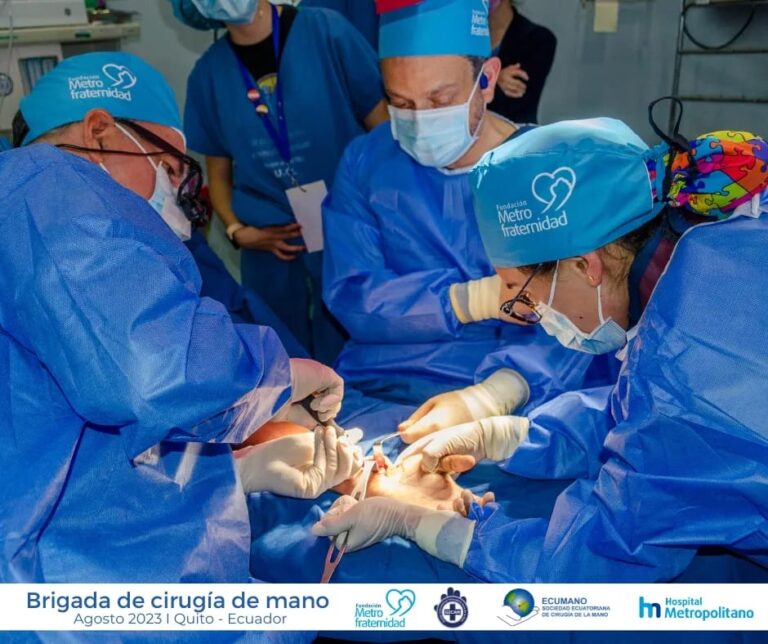
Alejandro Badia offers a treatment for Carpal Tunnel Syndrome (commonly applied at the Miami Hand Center) called “endoscopic release.” In this procedure, a small incision is made in the wrist crease, and an endoscope with a small camera is inserted, allowing the surgeon to see inside the hand and make the necessary division in the ligament without needing an incision larger than a centimeter. The high technology used in endoscopic microsurgery helps avoid soft tissue injury and pain after the procedure. If there is any, it is minimal. Furthermore, the advantage of this technique is not only eliminating the “unsightly scar” but also decreasing recovery time, allowing the patient to return to their normal activities sooner.
The long-term results of endoscopic Carpal Tunnel release are excellent and can offer more benefits than conservative treatments. Some patients occasionally complain of some pain in the palm of the hand when resting it on a hard surface; but aside from this, complications from the surgery are minimal.
The key to understanding Carpal Tunnel Syndrome is to view it as “a compressed central nerve“: it produces symptoms like numbness and tingling. These are conditions that should be evaluated by a surgeon specializing in these types of injuries and a neurologist, and confirmed through a nerve conduction study (where nerve latency in the wrist is measured). It is not surprising that Carpal Tunnel Syndrome, when diagnosed correctly, is easily treatable.
If you have pain in your hands, do not quit your job; instead, decide to call the Badia Hand to Shoulder Center in Miami for an appointment: we will free you from that unnecessary pain. For more information on Carpal Tunnel Syndrome and other upper extremity problems, visit Dr. Alejandro Badia’s website at www.drbadia.com or call 305-227-4263.
Alejandro Badia, MD, FACS Hand and Upper Extremity Surgery Badia Hand to Shoulder Center
View the original article: