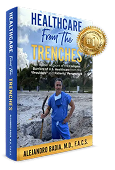
Hispanic Entrepreneurial Orthopedic Surgeons Dr. Alejandro Badia Hand Orthopedist Expert in Shoulder Arthroscopy Hand and Elbow Arthroscopy
Dr. Alejandro Badia, Medical Entrepreneur, Hand and upper extremity surgeon hand to shoulder Baptist Hospital of Miami Co-founder Da Vinci Learning Center
What does it take to be an entrepreneur?
Vision and imagination. One needs to clearly know what the goals and objectives are, and accept the fact that there is a high level of risk in order to achieve them. Within the medical field, service is an essential component, and therefore, it is necessary to achieve the three A’s: Being affable, admirable, and accessible.
What inspired you to start your business?
I am a founding member of an extremely successful surgical group. So successful that, soon, we realized we needed more surgeons to be able to meet the needs that exist in our community, regarding our sub-specialty, and to successfully serve our patients. The problem is that the busier we were, the less time I was able to dedicate to my patients and the harder it was to ensure that each person received the special attention they deserved. This is particularly true with patients who traveled from abroad to see me for special hand or upper extremity problems in general. I soon realized that I would have to downsize my practice, while simultaneously improving service and perfecting the infrastructure to offer the best care. BADIA HAND TO SHOULDER CENTER was designed with this in mind, as a priority.
How did you finance it?
I acquired the real estate shell through my local bank, which knew the potential of my practice and income, and then I financed the interior build-out of the clinic and therapeutic center on my own. I have wanted to keep my debt burden to a minimum. Then, I partnered with a national ambulatory surgery center company that understood the needs of building and opening a surgical center better than I did. This has resulted in efficiency and a streamlined process.
Does being Hispanic have any influence that you apply to your business?
Being Hispanic played a primordial role in WHERE I decided to practice and the demographic group of patients I could serve best. Although I was educated solely in the United States, and obtained my degree from an “Ivy League” institution (highly prestigious universities in the Northeast of the U.S.), I made sure to maintain and enrich my Latin roots, and cultivate those idiosyncrasies. This has allowed me to better connect with patients whose primary language is Spanish, who very often travel from Latin America to consult with me. Practicing in Miami has allowed me to offer the high level of medical care characteristic of the U.S., with the expertise and high technology that it entails, while ensuring that my international patients felt they continued to be surrounded by their native lifestyle and culture.
In case of adversity, how do you decide to move forward?
Adversity is a matter of perception. One has to know, expect, and accept that not everything can go exactly according to plan. It is comparable to surgery: the best surgeons know how to react and adapt to a sudden change in pathology or anatomy. How to manage complications is part of the “art of medicine.”
What was the biggest challenge you had with your business?
Creating a new center and surgical practice requires depending on many different people, particularly bureaucrats and subcontracted construction firms. Keeping them on track and focused has been an immense challenge.
If you could change one thing about your business, what would it be?
As a doctor practicing within a complex medical system, I would like to only have to deal with the patient, like in so many other businesses, where there is only the client and the provider. I particularly enjoy serving international patients, because I don’t have to request “authorization” from a low-level employee of an insurance company who normally knows little about the pathology in question; not to mention what the best treatment options are! With international patients, I can practice medicine in its purest form.
What was your ambition when you were a teenager?
I always wanted to be a doctor. Furthermore, I was very convinced that I would be a surgeon, and I often dissected fish or frogs in front of my 6th-grade classmates, which my teacher loved, as she shared my enthusiasm for biology. At eight years old, I accompanied my grandmother to a consultation with a famous hand surgeon at Columbia Presbyterian Hospital in New York City, because she suffered from crippling rheumatoid arthritis. That moment left a lasting impression on me… coincidentally, that surgeon trained the surgeon who, decades later, trained me in Pittsburgh. While in 7th or 8th grade, I read “The Making of a Surgeon” and I reread it much later and discovered that he was a product of Cornell, too… Finally, there is a great tradition of doctors in my family in Cuba, and it was only recently that I discovered I am a descendant of the founder of the Cuban Academy of Sciences.
Tell us which three entrepreneurs you admire most?
Craig Venter – Founder of Celera Genomics. He used his scientific talents to create a company that beat the NIH (National Institutes of Health) in successfully sequencing the human genome. He represents the power of free enterprise over the government: even in science.
Bill Gates (of course) – His story is epic, but, more importantly, he has used his money and invested it wisely toward solving important problems for humanity. Although he was widely criticized for his lack of charity and donations in the beginning, he has proven that one also has to be strategic and patient when making philanthropic decisions.
Muhammad Yunus – the innovator of microcredit. His entrepreneurial style has favorably affected the lives of millions of people and indirectly they have managed to emerge from poverty. Fortunately, he has been appropriately recognized with the Nobel Peace Prize.
For business meetings, what is better: breakfast, lunch, or dinner?
Dinner only. And late. I start working too early for a normal breakfast, and surgeons rarely give themselves the luxury of a real lunch.
What sacrifices have you had to make in your personal life to be successful in your business?
The sacrifices have been immense, but, in reality, I don’t consider them sacrifices. I love what I do, but, without a doubt, my business inevitably intrudes into my personal life, in many ways. I married “late” in life and have just started to create a family. But, despite everything, I wouldn’t have wanted to do it any other way…
What is your favorite thought or expression?
A surgery professor in New York once told me, “Surgeons don’t work hard; they work a lot. Ditch diggers work hard!” I often try to think about that when I am in the operating room frustrated, in the early hours of the morning…
Is it difficult to be unconventional?
Being “original” is a matter of semantics. The truth is that being conventional implies that one does the same as the vast majority. Since success presupposes and entails that one sets oneself apart, favorably, from the “status quo”, one HAS to be original to reach new heights. This does not mean, however, that mistakes are not made.
What was the most serious mistake you made?
I had an opportunity to join a swim team at an early age, apparently due to an innate talent that was recognized. I did not pursue it and, instead, returned to that sport much later, when it was already, probably, too late to reach my potential. I often wonder what achievements I could have reached in that athletic arena. Seeing Pablo Morales, another Cuban-American and also a Cornell alumnus, win gold medals in the butterfly stroke (which was also my stroke!) made me feel that way again. My passion for these individual sports has led me to personally attend the last 4 Olympics as an enthusiastic spectator!
Do you consider yourself an innovator? Why?
I consider myself an innovator because I have managed to combine the pursuit of scientific and clinical excellence with the desire to educate the public on common ailments within my little-known surgical specialty. These require two different mindsets. My goal and future objective is for the lay public to understand the ubiquitous clinical problems of the hand and upper extremities, such as carpal tunnel syndrome or shoulder bursitis (impingement syndrome). Educating the public while fostering our scientific understanding of these topics involves two different, but equally important, types of talents.