Report by Evelyn Pineda | Dec 5, 2017
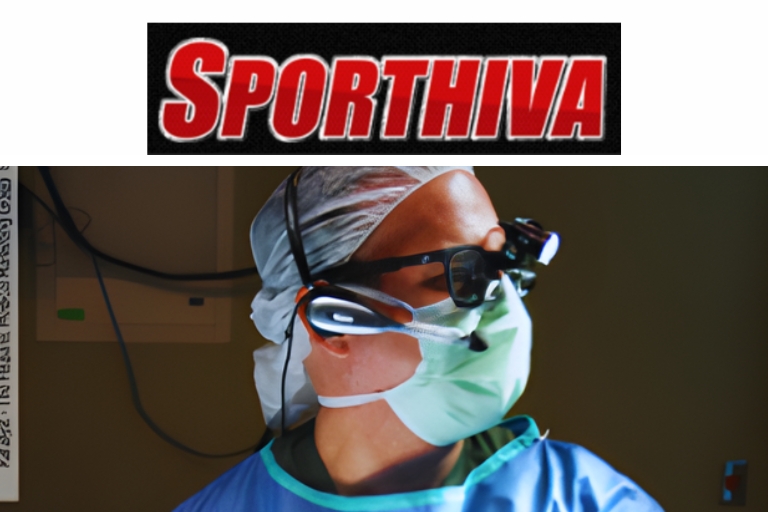
Alejandro Badia is an expert in performing minimally invasive procedures for upper extremity sports injuries. Miami, Florida, United States.
Sports injuries can sideline professional players for several seasons, but they can also affect those who engage in regular physical activity. Dr. Alejandro Badia, an upper extremity and hand surgeon from the United States, explains that the most common traumatic fracture injuries in the athletic population are found in the fingers and include dislocations, sprains, muscle strains, bone fractures, tendon inflammation, and torn ligaments. Overuse (chronic) injuries are more likely to occur in athletes who play sports that require them to repeat a particular movement (baseball, soccer, tennis, or golf).
Sporthiva took the opportunity to ask him questions about the injuries suffered, particularly by soccer players:
Is it normal for an athlete to injure their knee at some point, or are there other frequent upper extremity injuries?
Knee injuries in soccer players are obviously the most common. But many also suffer wrist and elbow injuries from falls. The goalkeeper suffers more from hand injuries, particularly to the fingers, due to contact with the ball and the falls that are part of their activity.
What is the upper extremity operation that entails the highest risk for a soccer player?
The riskiest upper extremity operation… well, it is important to understand that most surgeries are not risky. The real risk is not recognizing the pathology or the problem and not intervening in time.
A good example is chronic wrist pain that often occurs during a fall. The team doctor is often a lower extremity specialist and simply tells the player that the wrist pain is a sprain.
When the pain persists, it is usually a more complicated problem, for example, of the ligamentous structure. And that requires an arthroscopy, not only to diagnose but to resolve the problem.
Obviously, there are other sports where upper extremity problems are much more common, for example, baseball or American football, and also sports that are more common among the general public, such as tennis and golf. These athletes frequently suffer from elbow, shoulder, and also wrist problems, particularly tennis players.
Which famous soccer player or athlete have you operated on?
The most famous has been Adrian Foncette, goalkeeper for the Trinidad and Tobago team, who just eliminated the United States from the World Cup in Russia. It means that indirectly I had something to do with my country not being able to participate in the World Cup, but hey, my job as a doctor is more important, obviously.
Other famous athletes, for example, American football player Terrell Owens, better known as T.O., who played for the Dallas Cowboys. I performed a flexor tendon reconstruction on his dominant hand, and he later managed to win many games with his skillful hands.
Among the athletes who have passed through your hands, which one do you have the fondest memories of?
I think one I have the most affection for is Adrian Foncette, who had a nerve problem where I was able to perform tendon transfers to restore the extension of his fingers and hands, obviously very important for a goalkeeper, and he was able to return to his high-level sport.
Have you treated any Honduran players?
I haven’t treated any Honduran athletes simply because I think I work in a private center in Miami and we just aren’t that well-known in Honduras, although I have had many Honduran patients over the last 20 years.
Why are there players who are constantly getting injured, like Santi Cazorla? What is the reason for this?
I think players who get injured constantly do so because, first, they don’t warm up enough and they don’t have certain muscles trained. At our center, we use electro-neuromuscular therapy a lot, which is an electrode therapy used to quickly recover from minor injuries, but also to prevent them. It’s something that can be explored in depth at some point. I am personally using it right now to recover from a shoulder and knee arthroscopy that I had done simultaneously 6 weeks ago. I barely missed any work as a surgeon, and 2 weeks ago I started jogging.
Is it important for every soccer team to have a doctor with experience in injuries?
I think teams don’t necessarily need the doctor to be part of the club, but obviously, they should be a point of reference. Meaning, they should be in close contact, but it’s important that it’s not just one orthopedist, but several. One who is more dedicated to the lower extremity, like the hip, knee, and ankle.
Perhaps one who only does foot and ankle, and another who does the upper extremity. The athletes I see have nothing to do with my good colleagues who do knees. They are two totally different branches of orthopedics. It is important for these elite athletes to see someone who is specifically dedicated to the problem they have.
Is there any sport where injuries are harder to recover from?
They are the ones that require a lot of demand on the joint. For example, the wrist in tennis. Many athletes retire due to a wrist problem because they can’t withstand the impact. I think this often happens because they haven’t been evaluated by someone who truly dedicates themselves solely to that area. The elite tennis players I’ve operated on have typically seen 3 or 4 doctors before me, and the diagnosis simply slipped by them because they don’t perform wrist arthroscopies.
Could you explain a little about your passion for treating sports injuries?
I am very passionate about treating sports injuries because these are highly motivated patients, they are well-trained, and they have good physiology, which means they recover much faster than the average patient. I really like seeing an athlete return to their favorite sport simply because the injury was recognized and could be resolved.
That is something a doctor is passionate about. It’s important to recognize that I enjoy this just as much with weekend warriors, who aren’t professionals, as I do with elite athletes. The important thing is for the athlete to see the appropriate orthopedic subspecialist to have the best chance of recovering and returning to their sport.