
CREDITS: Informador Editorial Staff / NBVV
GUADALAJARA, JALISCO (AGO/31/2012).-
The condition, known as Carpal Tunnel Syndrome, primarily affects middle-aged women. How many hours a day do you spend in front of a computer, using a mouse or typing? Have you experienced fatigue or any discomfort? Dr. Alejandro Badia is unaware that his work or study hours are the cause of the common Mouse Syndrome or Carpal Tunnel Syndrome (CTS), as it is known in medicine.
In an interview with this publication, the president of the International Society of Sports Traumatology of the Hand (ISSPORTH), during his visit to Mexico to attend the International Congress of Hand Surgery and the XIII International Course on Hand Surgery as a special member, explains that this condition can be caused by reasons other than computer use.
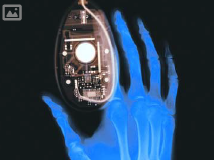
“Cardiovascular syndrome (CTS) is a myth created by the media and perhaps by lawyers in the United States, when the number of lawsuits related to it increased. But there is no scientific evidence to prove that using a computer—specifically the mouse—damages your hand,” the specialist explains.
The renowned doctor asserted that if computers were the main cause of CTS, patients would surely be younger; however, he says, “I never see teenagers among my patients, and they spend a large part of their time in front of a computer.”
Hand problems are so common that they affect 7% of people. “An injury or tumor in a finger, a congenital deformity, nerve compression—these are extremely common hand conditions,” Abadía warns.
However, the challenge lies not in treating them, but in referring the patient to a specialist in that field. “There is a movement within the American Society for Surgery of the Hand (ASSH) to educate the public and ensure that when an injury occurs, it is treated by hand specialists. Many people with injuries don’t go to the appropriate doctor.”
Regarding Carpal Tunnel Syndrome
Badia explains that the most frequent symptoms are numbness and tingling in the hand. Sometimes pain and weakness are felt, especially in the thumb; in extreme cases, the muscle can atrophy.
The syndrome is more commonly observed in middle-aged women—those of menopausal age—or in people with chronic conditions such as diabetes, gout, or thyroid disease; it is also common in women during the third trimester of pregnancy or when there is rapid weight gain.
Treatment focuses on reducing tendon inflammation, primarily with steroid injections such as cortisone. But the most common treatment is splinting the hand at night, preventing wrist movement during sleep. If the nerve compression is severe and symptoms persist, the next step would be surgery, which Dr. Alejandro Badía describes as “extremely successful, thanks to advances in the field.”