
At the world congress of hand surgeons, recently held in Miami, the greatest technological advances were presented to resolve the problem of hand joints deteriorated by disease, including those of the thumb.
March 26, 2019
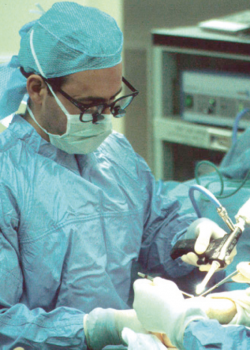
World Congress of Hand Surgeons
“Arthritis of the carpometacarpal joint, located at the base of the thumb, is a common, painful condition that occurs most frequently in middle-aged women. It also occurs in men, although it tends to start at a later age and cause less disability. This condition progresses gradually and eventually, the joint is destroyed, causing pain, loss of function, and weakness in gripping,” said Dr. Alejandro Badia, an orthopedic surgeon subspecializing in hand surgery, affiliated with Kendall Regional Medical Center and founder of the aforementioned congress.
These arthroscopic techniques, which allow operating through very small incisions, offer better aesthetic results, less pain, less scarring, and less risk of infection. Joint replacement at the base of the thumb is one of the newest advances.
“Today, different types of implants can be placed at the base of the thumb, including an implant made of a combination of plastic and titanium,” he said. Titanium, called “the space-age metal,” has great advantages; it is lightweight, very strong, and corrosion-resistant.
The expert explained that minimally invasive surgery techniques common in the knee and shoulder are being applied to hand, wrist, and elbow operations, with joint replacement.
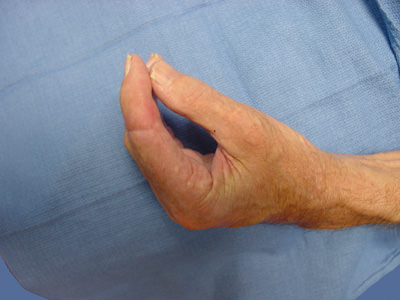
“These replacements allow restoring functionality to the thumb, providing patients with immediate and significant improvement. These implants have been accepted in Europe for more than 15 years, long before American orthopedists paid them the attention they deserve,” emphasized the surgeon, who recently published a medical report on the benefits of carpometacarpal replacement in the scientific journal American Journal of Orthopedics.
Some finger prosthesis manufacturing companies participated in the congress, showing that different materials exist for replacing the base of the thumb and how they should be implanted in the patient to restore joint function. Some of these materials are very similar to the chemical composition of bones and soft tissues, although no one has proven that one is better than another.