
At the world congress of hand surgeons recently held in Miami, the greatest technological advances were presented to solve the problem of hand joints deteriorated by disease, including those of the thumb.
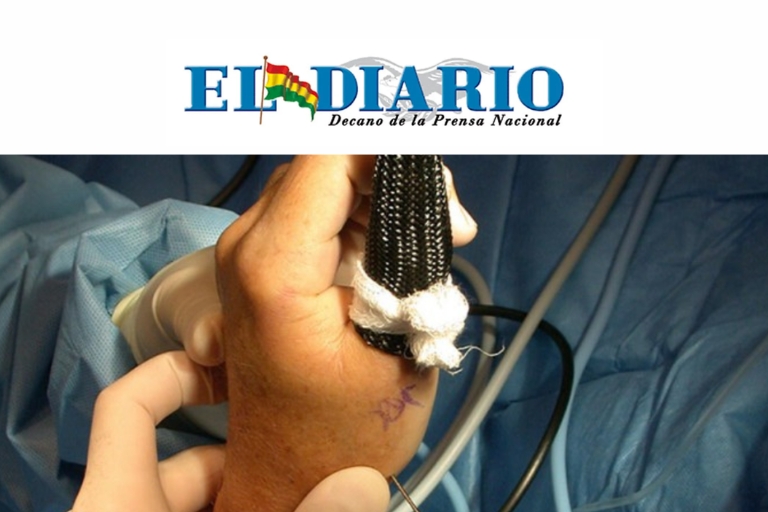
“Arthritis of the carpometacarpal joint, located at the base of the thumb, is a common, painful condition that occurs most frequently in middle-aged women. It also occurs in men, although it tends to start at a later age and cause less disability. This condition progresses gradually and, eventually, the joint is destroyed, causing pain, loss of function, and weakness in gripping,” said Dr. Alejandro Badia, an orthopedic surgeon sub-specializing in hand surgery, affiliated with Kendall Regional Medical Center and founder of the aforementioned congress.
The expert explained that minimally invasive surgery techniques common in the knee and shoulder are being applied to operations of the hand, wrist, and elbow, including joint replacements. These arthroscopic techniques, which allow operating through very small incisions, offer better cosmetic results, less pain, less scarring, and less physical therapy. The replacement of the joint at the base of the thumb is one of the newest advances in this field, according to Dr. Badia.
The thumb is of vital importance for the normal function of the hand; however, thousands of people suffer the loss of this function due to arthritis. These individuals are benefiting today from the new prostheses that now exist, to return to the thumb and the hand their millions of possibilities.
“Today, different prostheses can be placed at the base of the thumb, including one that closely resembles a hip replacement. It is made of a combination of plastic and titanium,” he said. Titanium, called the “space age metal,” has low density, is lightweight, very strong, and resistant to corrosion.
“These replacements allow the thumb’s function to be restored almost immediately, within five days, with little therapy. These implants are now common, but many people do not know it; many general practitioners and even general orthopedists are unaware of them,” stated the surgeon, who recently published a medical report on the benefits of carpometacarpal replacement in the specialized journal The American Journal of Orthopedics.
Several thumb prosthesis manufacturing companies participating in the congress showed that different alternatives exist to resolve damage at the base of the thumb, depending on the degree of deterioration of the joint. Some of these alternatives are very simple, such as a spacer that looks like a small piece of white Velcro, used as a pad so there is no painful friction within the joint when deterioration is just beginning. This spacer is made of polyurethane, a type of plastic that the body assimilates in 5 or 6 years and replaces with fibrous tissue, which prevents bone-on-bone friction. Other alternatives, when the disease is very advanced, include jointed prostheses implanted inside the bones.
Dr. Leonel Jaen, a Panamanian hand surgeon who attended this congress in Miami, said that surgery at the base of the thumb has a whole series of techniques that have yielded very good results, as they achieve the goal of removing pain and maintaining movement. The new techniques manage to preserve more tissue, which is important for restoring much of the original strength the patient had in their hand. The strength is not the same as when the hand was young and healthy, but it is enough for it to function.
The congress brought together more than 120 surgeons and physical therapists from different countries around the world. “This conference, plus the experiences of other surgeons, has helped me in my practice,” expressed Dr. Jaen.
Guatemalan physical therapist Marta Beatriz Pineda, who works with three hospitals in her country and also attended the conference, said that in her field, totally innovative techniques for hand rehabilitation are being applied. She explained that working together with hand surgeons from the United States, where many patients from her country come for surgery, has allowed for a very high success rate.
“We have very good surgeons in Guatemala, but this type of surgery is not yet performed there. We have had to come here to the United States; I was on a tour that lasted two months, and then every year we come to these congresses to increase our capabilities. Thanks to the joint effort, we have achieved a one hundred percent recovery for patients,” said Ms. Pineda, who is president of the Association of Hand Therapists in Guatemala.
The therapist added that a group of hand surgeons from the United States travels annually to Guatemala to operate for free on low-income individuals, performing an average of 50 surgeries each year. This humanitarian medical mission, called The Guatemala Healing Hands Foundation, was created by fellow therapist Lynn Bassini, who is of Guatemalan origin and based in New York.